Some time ago we agreed to take part in the London Nocturne Series, racing our Pennies around the Smithfield Market much like we did last year in Knutsford only with slightly less fear of impalation. The London Nocturne Series is a gem, a jewel in the British sporting calendar and, somehow, manages to bring a top sporting event to the very centre of London with totally free public attendance, much like any other top sporting event abroad. This alone deserves immense applause, the fact that it is so well run, is deeply exciting and competitive deserves nothing but an encore. All achieved in these cash-strapped days of reluctant sponsorship as well.
Their PR company needed a ‘tie-in’ as to how the Penny Farthing races were significant to the races, especially as they were dealing with a jaded complacent tired London media, fighting for space with Ms Gaga and various footballers. I wrote the following, it’s all based on just two photos the American cycle historian Lorne Shields sent me . They needed a ‘London tie-in’ and he had no time to provide this, his first delivery was of two fantastic photos and I did the rest:
The 1883 Showdown
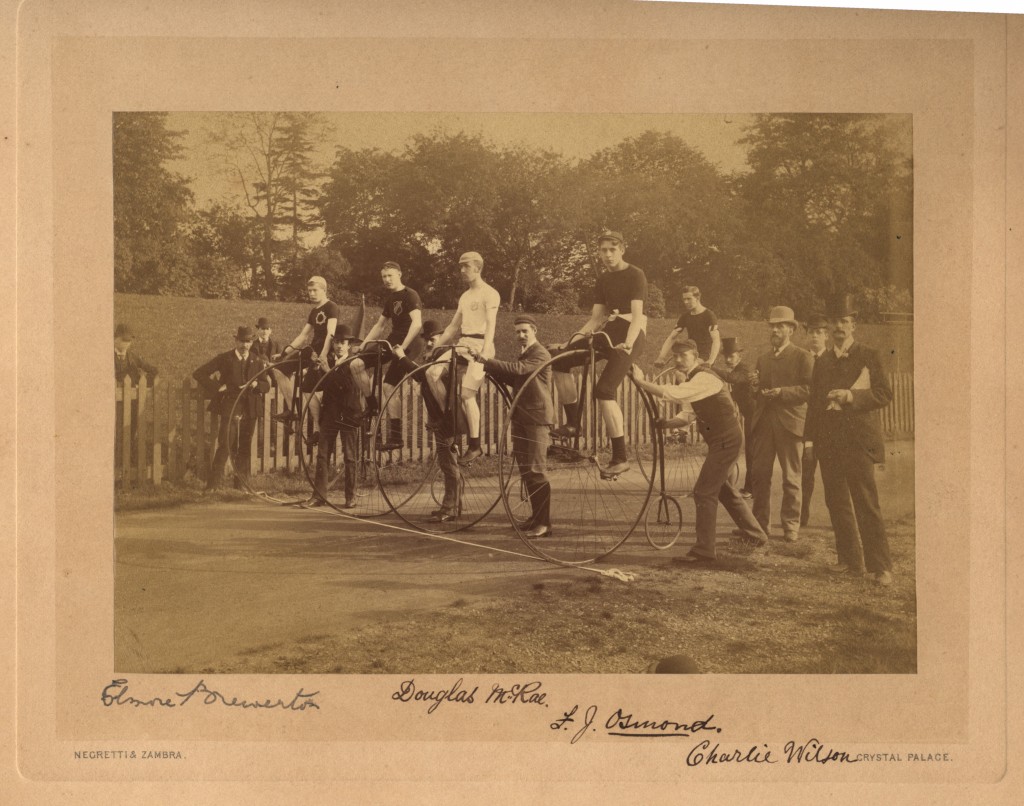
Fig: 1. 1883 The Crystal Palace Grand Old Ordinary Challenge Cup, L- R Elmore Bremerton (USA) Douglas McRae (Scotland) Fritz J. Osmund (Germany) Charlie Wilson (England)
Ordinaries had a short life – roughly 30 years from 1860 onwards. In their day they were the fastest thing on the road, expensive, glamorous and used for racing with plenty of bets placed thereon.
Doping was as rife then as it is now (until recently of course) and unscrupulous managers such as the legendary’ Choppy’ Warburton drove their jockeys to any lengths to gain glory not to mention big cash on the finishing line.
The Ordinary was not used for shopping or getting to work, that came later with The Safety Bicycle, resigning the Ordinary to village ponds, museums and circuses as it adopted the moniker the ‘Penny Farthing’.
International competition was ferocious and the famous Crystal Palace circuit saw many a showdown, but few as infamous as the 1883 battle between Elmore Bremerton (USA) and Fritz J Osmund (Germany). Having seen off all-comers through the heats, and amongst a grid of four riders, Bremerton and Osmund crossed the line simultaneously a photo-finished ruined only by the inebriated photographer being blinded by his own flash-powder causing a near-fatal tripod collapse.
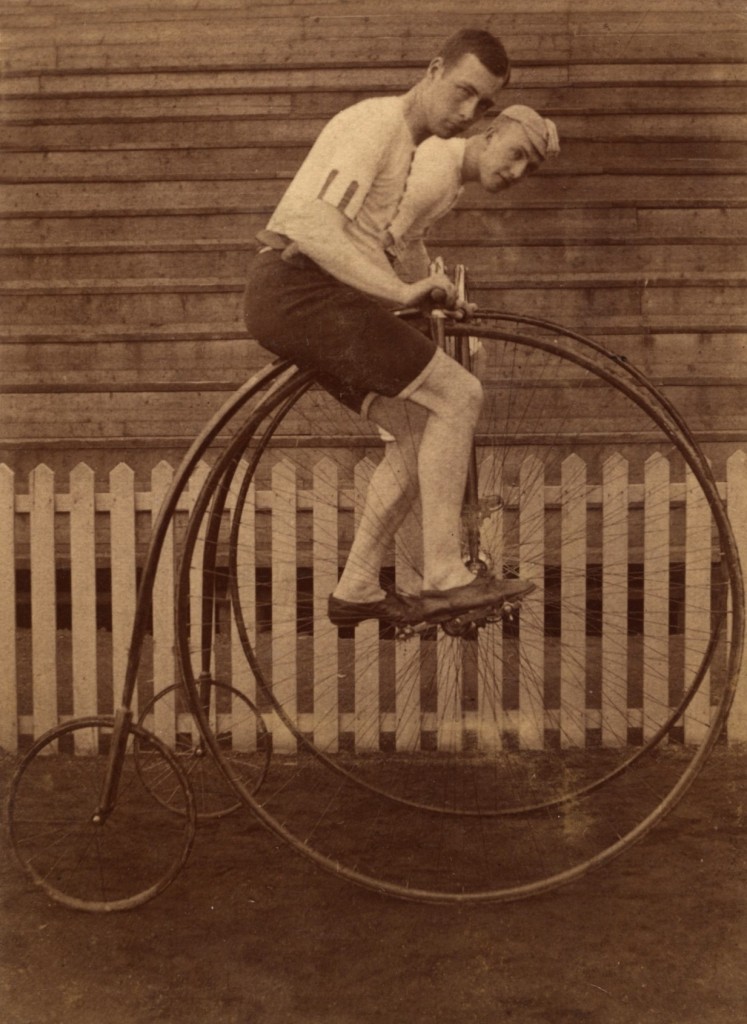
After great controversy, much media bragging by Bramerton and scrupulous training by the over-disciplined Osmund the two met once again in 1887 for a showdown at the make-shift Finsbury Circus Oval (shortly before it was destroyed by fire) only for the dead-heat finish to be repeated. Soon after, the racing Ordinary was replaced by young scorchers on their pneumatic-tyred board-racing cycles, rendering the dangerous days of High-Bicycle racing a thing of the past.
The 1887 Rematch
Fig: 2. 1887 The Finsbury Trophy Left: Elmore Bremerton (USA) and right: Fritz J. Osmund (Germany) wearing his trademark Pickelhaube racing cap by Das Rapha Sports Industrie GMBH
No-one knows what exactly became of our two plucky heroes. Bremerton returned to the USA to escape several paternity suits and raced hot-air balloons whereas Osmund’s future included speed-skating in Holland and in his native Germany.
June 11th 2011 sees the first return to London of these racing Ordinaries, this will be no costume parade, but a fight to the finish by riders from Australia, The USA, Belgium, Canada, Germany, Ireland, Switzerland and Great Britain, some will even ride their steeds over from Paris as a final training session ready for the big event.
Of course, little of this was printed. Some history is bunk, none of it is ‘the truth’ some of it is renovated for conspiratorial purposes, but the best history is simply made to fit: purpose built, if you will.
As in Premiership Football, the difference between the fastest racers (Jim Brailsford, Guy Peterson, Steve George, etc etc) and the also-rans (me) is astonishing, but here I’d prefer to agree with the epithet that it is not the winning that matters, but the taking part.
But then I would say that, If I’d won, or even come 6th, history would be deftly re-written. Probably by me.
portrait of a winner